Product
Enterprise SaaS
Timeline
2024 - 2025
Project
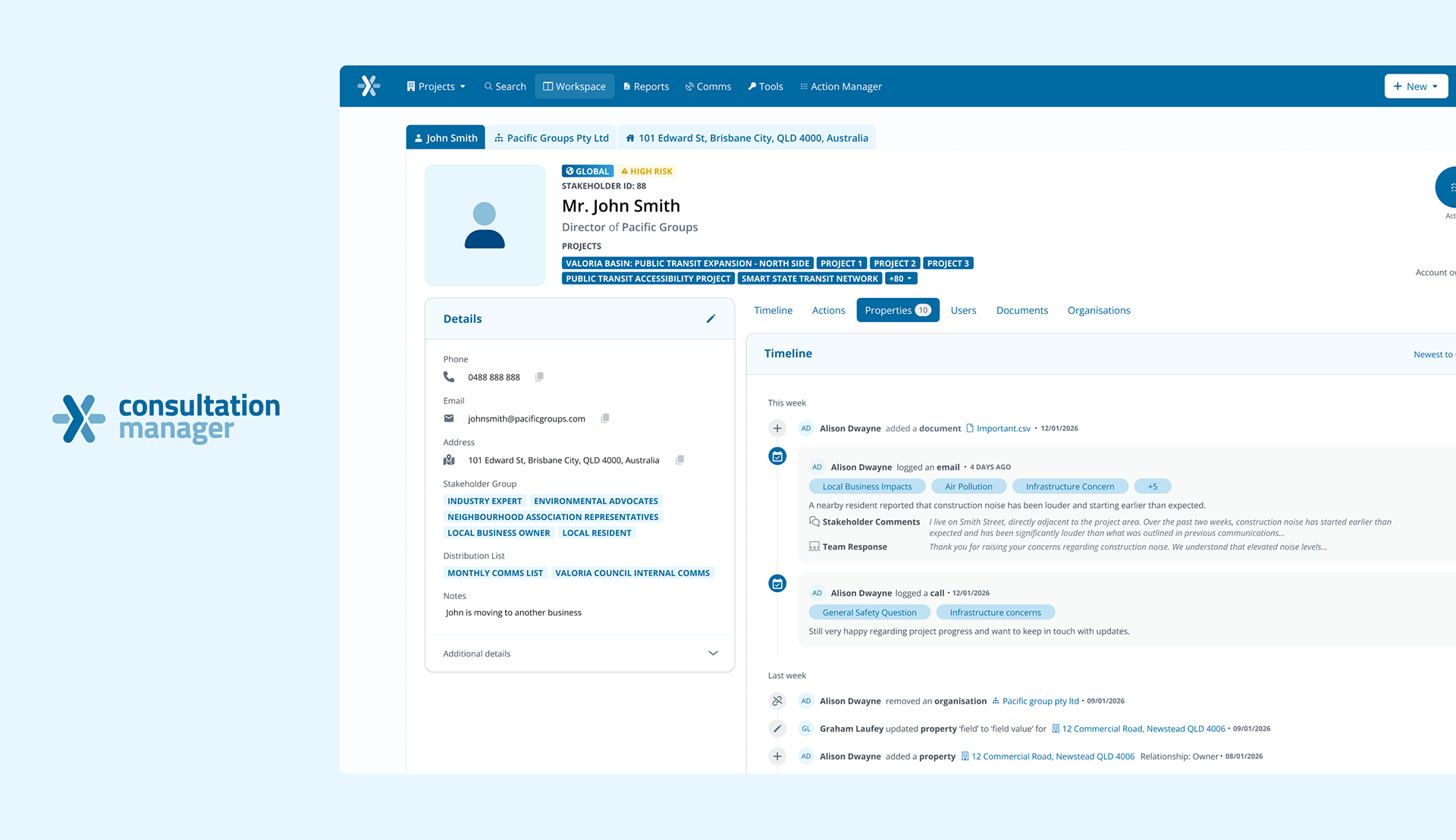
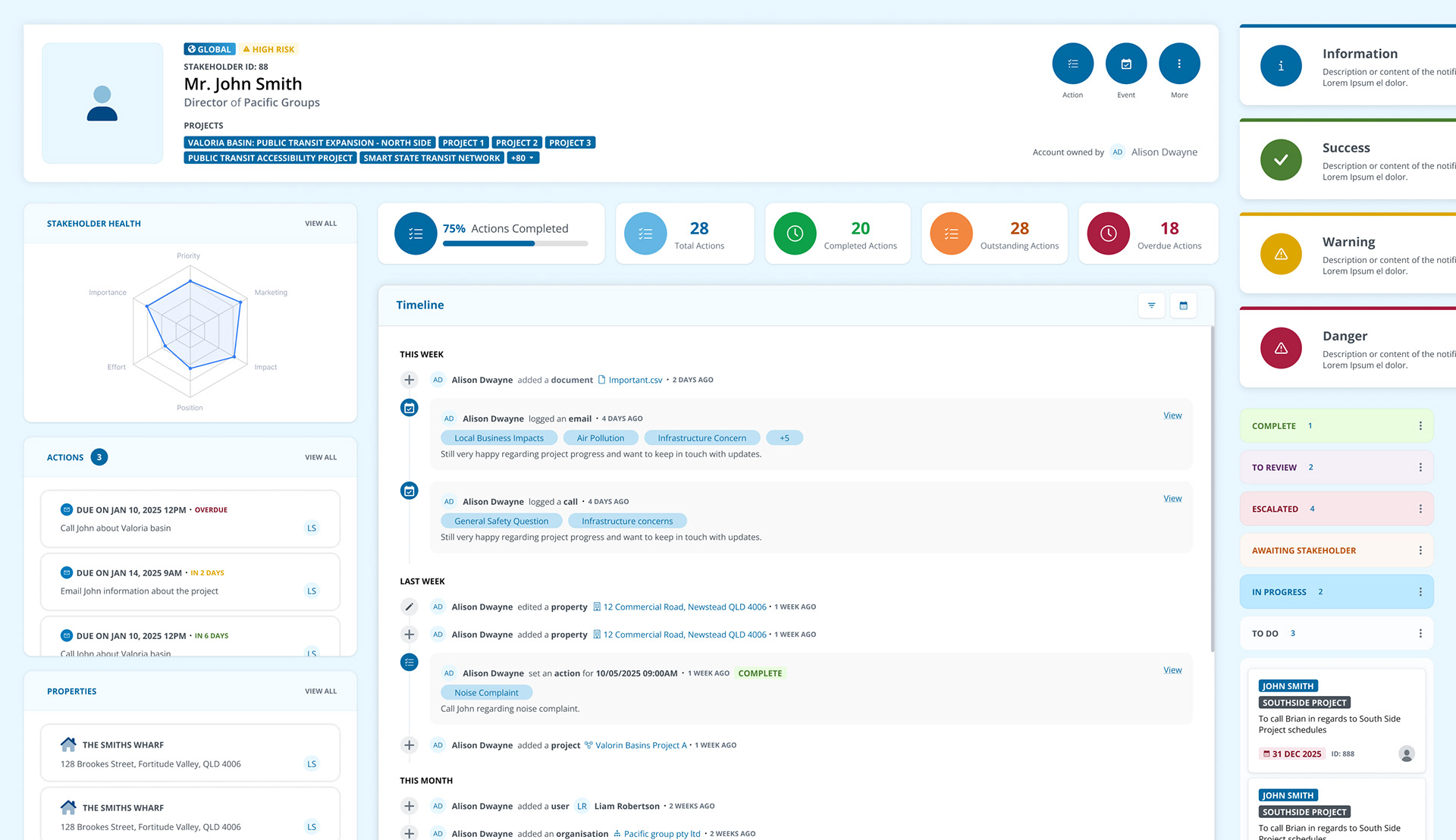
Reimagining Stakeholder Management: A Data-Driven Profile Redesign
My Role
Lead Product Designer (End-to-End Ownership)
Led the end-to-end redesign of a core enterprise workflow — from discovery, research synthesis, and information architecture through to prototyping, specification writing, and release validation. Partnered closely with Product and Engineering to translate complex stakeholder management needs into a structured, insight-led experience that aligned user value with business goals.
Problem Statement
The current stakeholder profile experience is fragmented, inconsistent, and difficult to navigate, making it challenging for users to quickly understand stakeholder context and act with confidence. Critical information is buried within unstructured layouts, limiting visibility into stakeholder priorities, influence, and engagement history. As a result, teams struggle to track meaningful interactions over time, identify risks and opportunities early, and make informed, strategic decisions. A redesign is needed to establish a clear, structured, and insight-led experience that surfaces high-value information at a glance, reduces cognitive load, and better supports collaborative, data-driven stakeholder management.
Key Functions
1. Information Architecture & Structured Layout
Reorganise data models and page hierarchy to create a clear, guided experience that prioritises high-value insights and reduces cognitive load.
Reorganise data models and page hierarchy to create a clear, guided experience that prioritises high-value insights and reduces cognitive load.
2. Engagement Timeline & Relationship Mapping
Unified timeline capturing events, actions, relational entities, and custom records — enabling users to understand stakeholder history and progression over time.
Unified timeline capturing events, actions, relational entities, and custom records — enabling users to understand stakeholder history and progression over time.
3. Structured Capture of Priorities & Interests
Standardised fields for stakeholder motivations, risks, and influence factors to ensure consistency, comparability, and accessibility across teams.
Standardised fields for stakeholder motivations, risks, and influence factors to ensure consistency, comparability, and accessibility across teams.
4. Tagging & Segmentation System
Flexible categorisation framework allowing stakeholders to be filtered and grouped by themes, projects, risk level, or strategic focus areas.
Flexible categorisation framework allowing stakeholders to be filtered and grouped by themes, projects, risk level, or strategic focus areas.
5. Cross-Platform Integration
Seamless integration with CRM systems, project dashboards, and related tools to embed stakeholder insights directly into existing workflows.
Seamless integration with CRM systems, project dashboards, and related tools to embed stakeholder insights directly into existing workflows.
6. Visual Insight Indicators
Clear, scannable visual cues (e.g. influence level, engagement health, risk status) to support rapid decision-making without deep navigation.
Clear, scannable visual cues (e.g. influence level, engagement health, risk status) to support rapid decision-making without deep navigation.
7. Reporting & Audit Support
Exportable, structured reporting aligned to industry compliance and audit requirements, ensuring traceability and governance readiness.
Exportable, structured reporting aligned to industry compliance and audit requirements, ensuring traceability and governance readiness.
Tools

PROCESS OVERVIEW

User Research
Heuristic Evaluation of Legacy Design
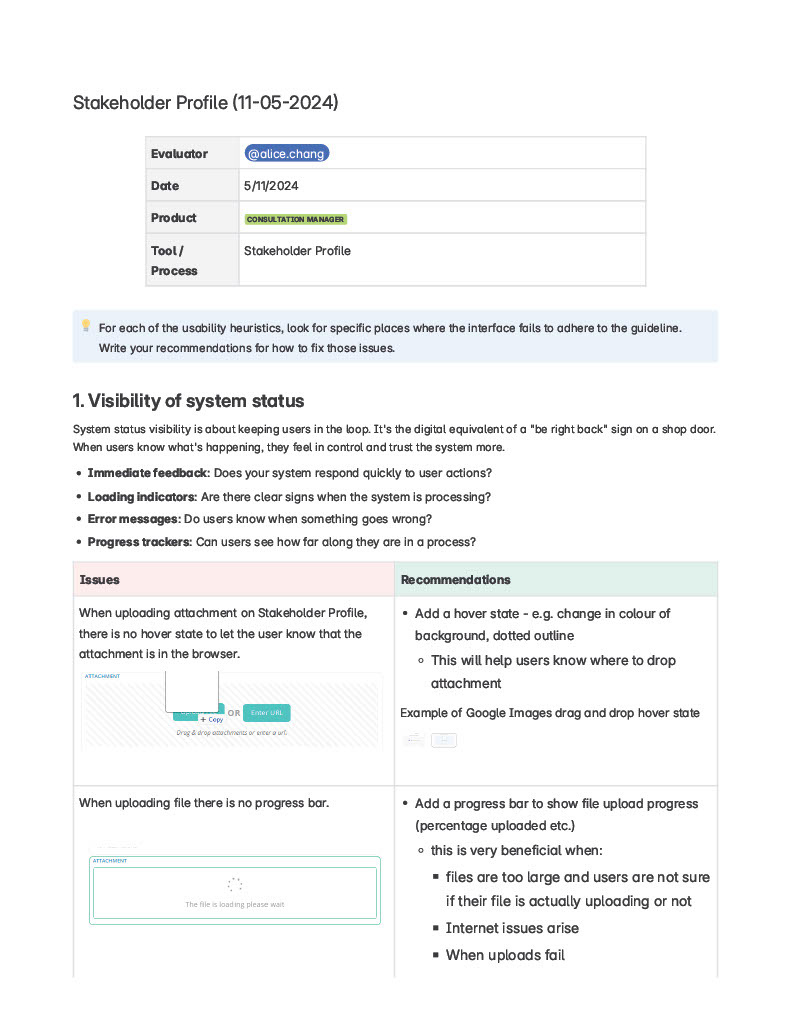
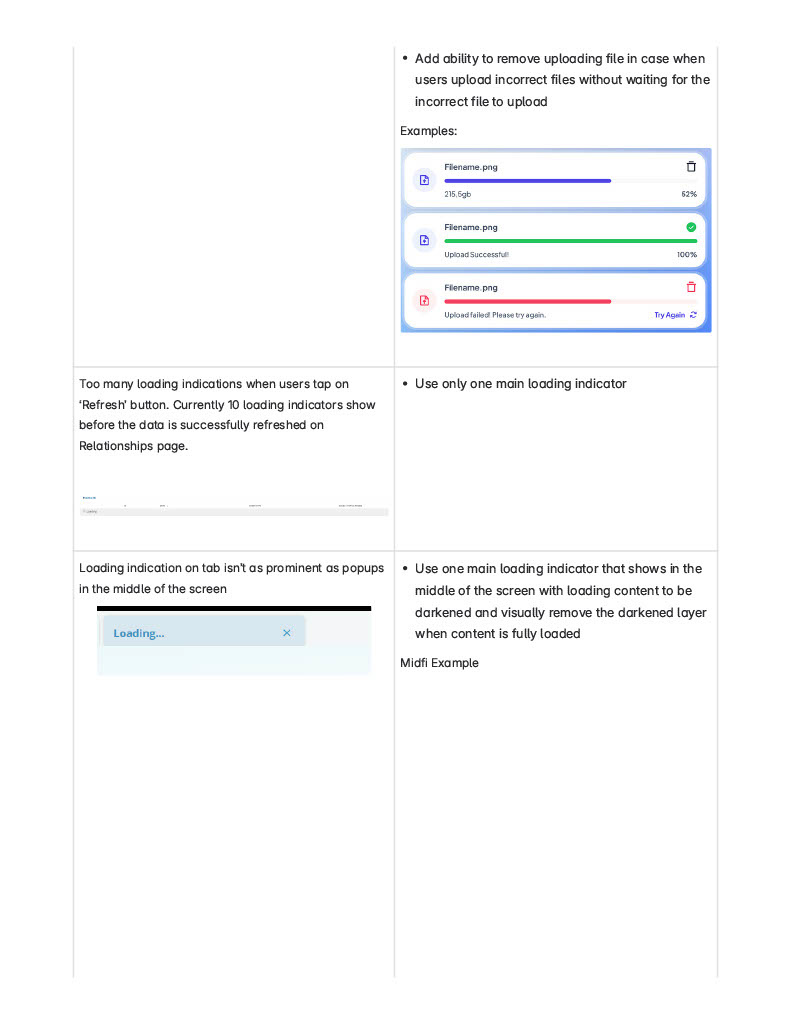
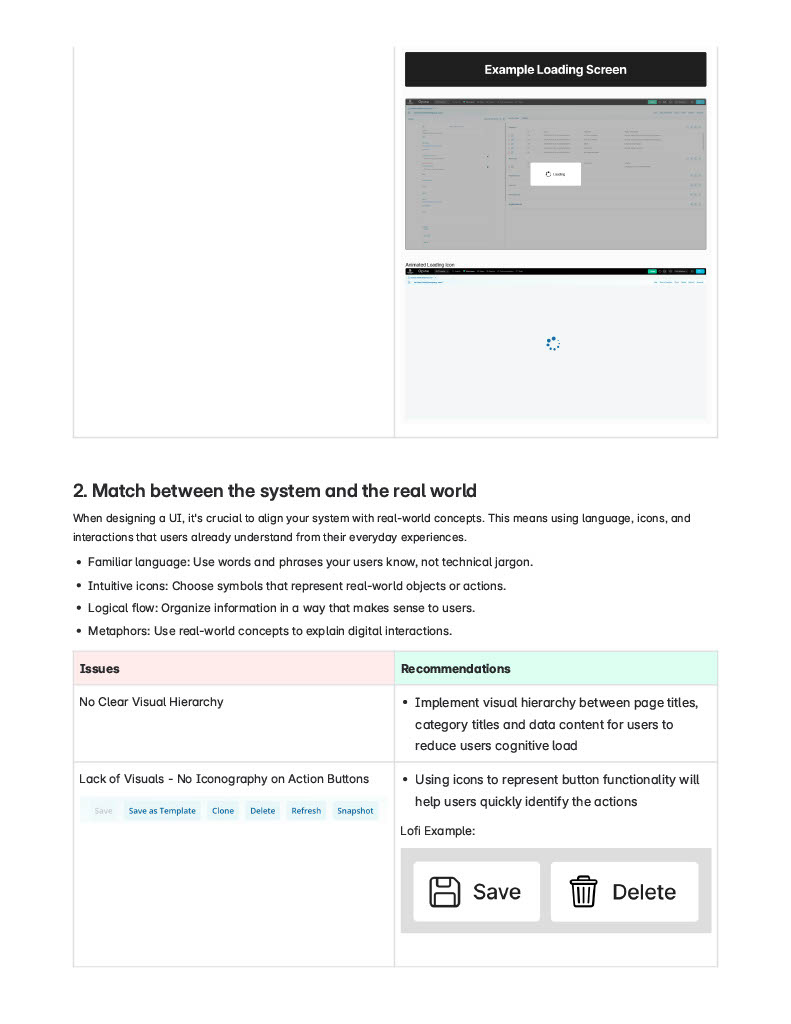
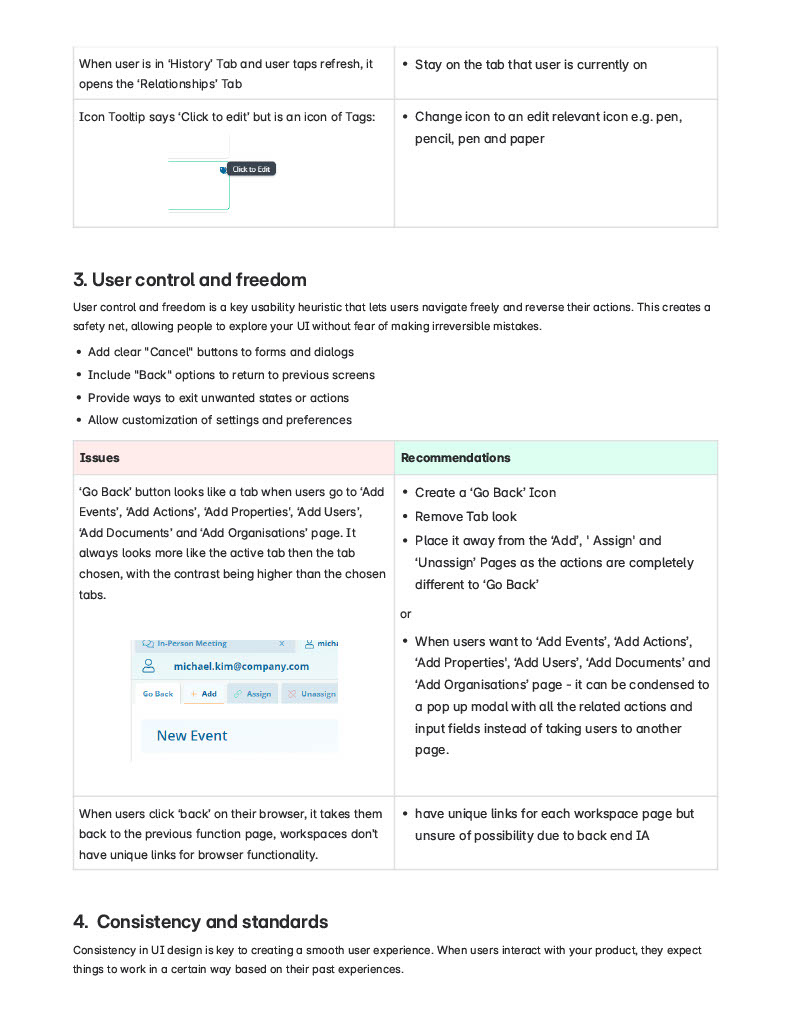
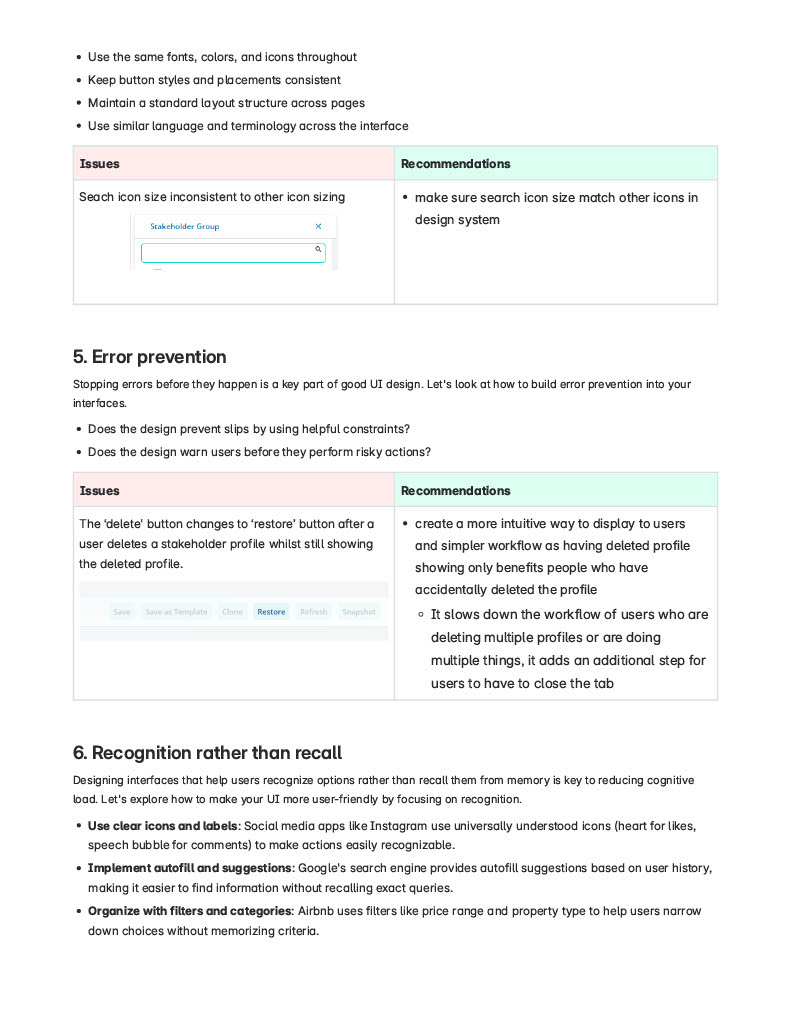
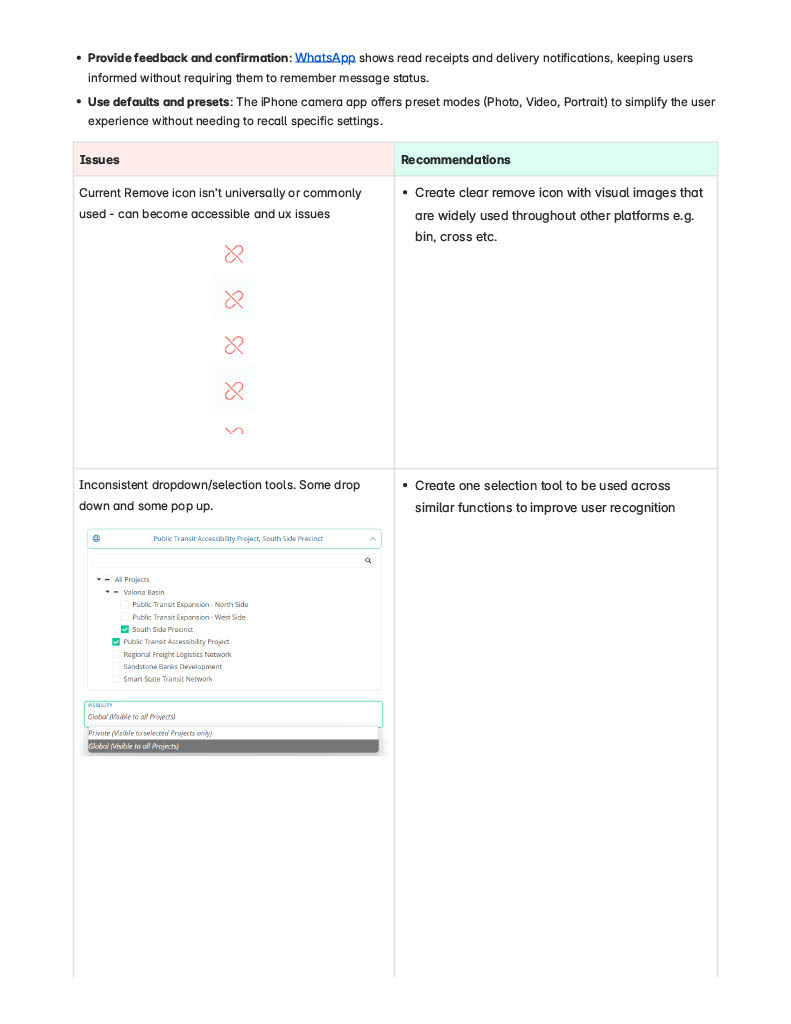
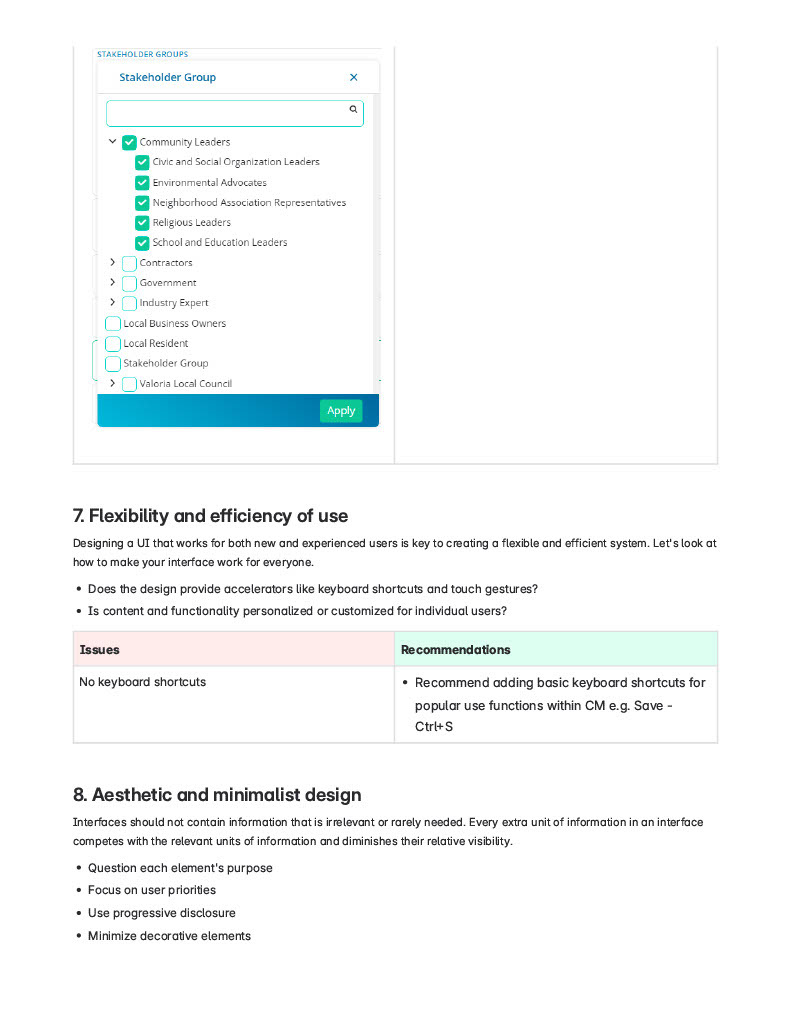
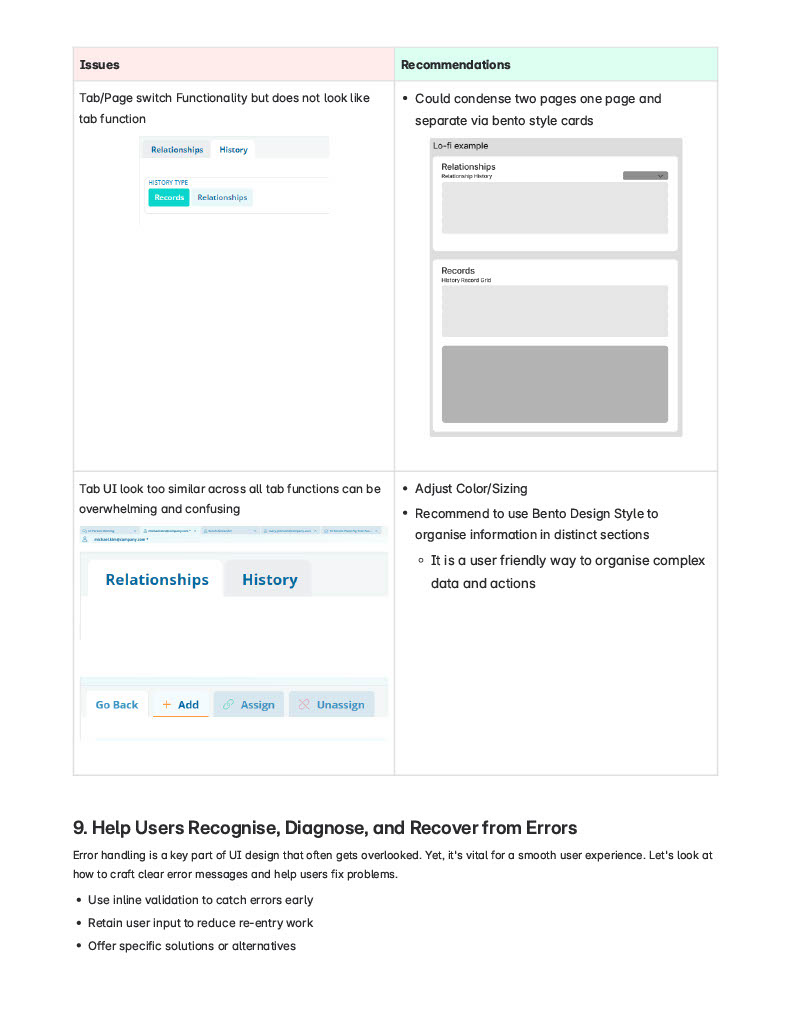
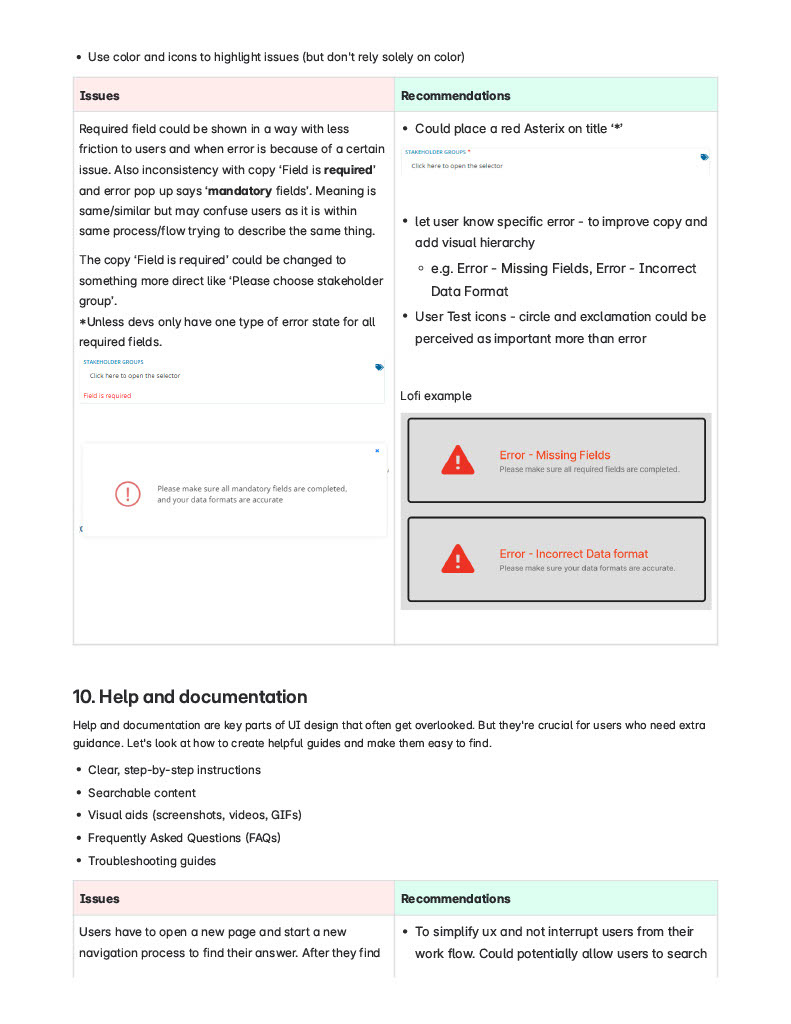
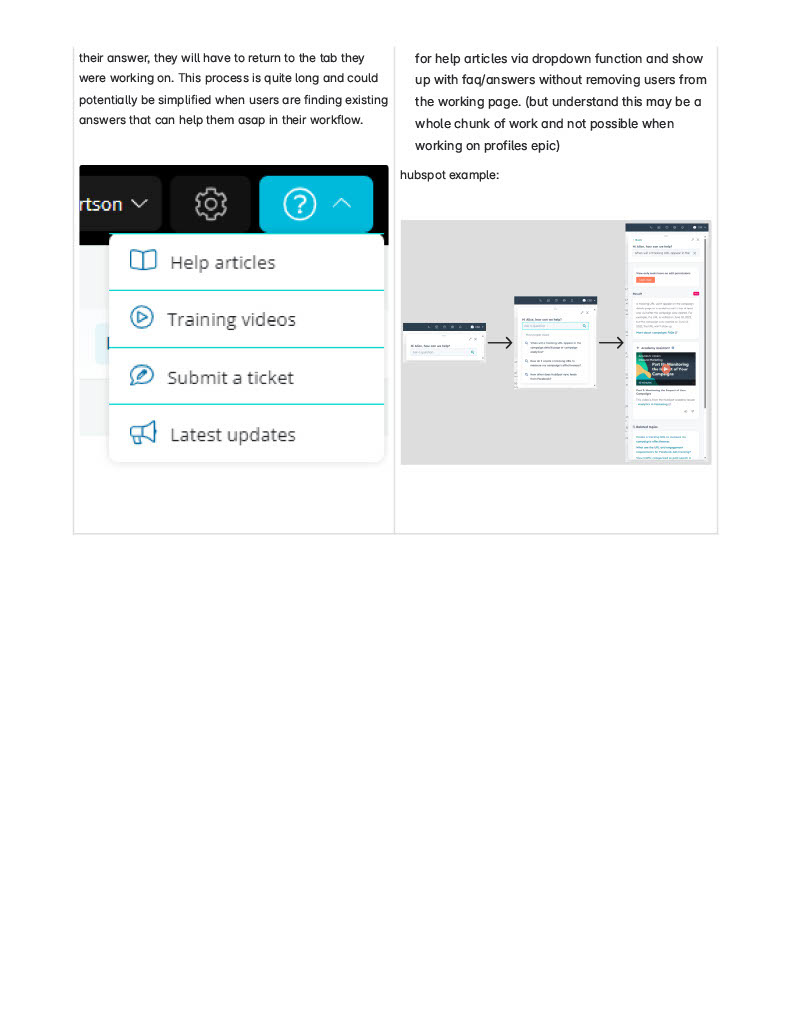
Client and Competitor Research
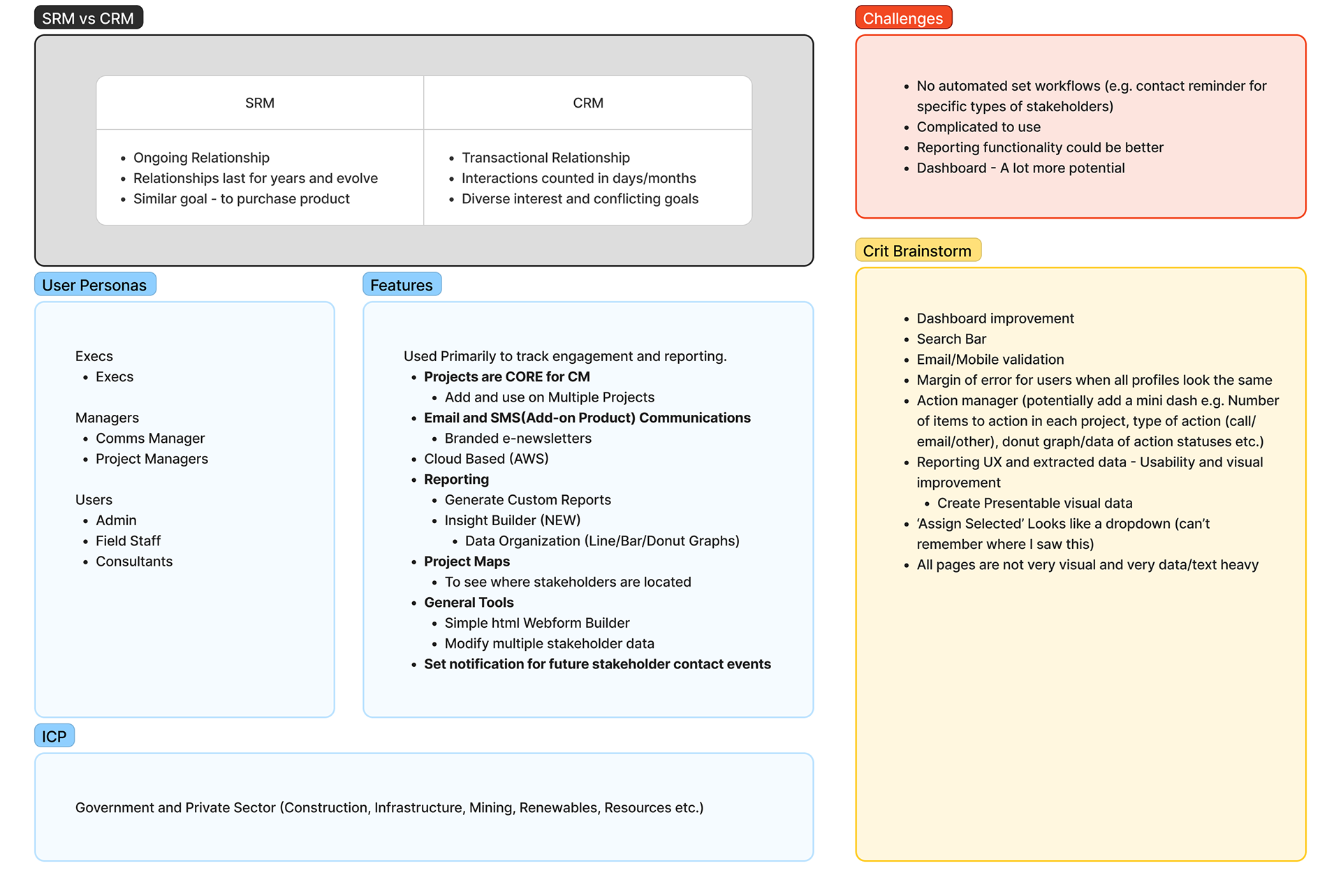
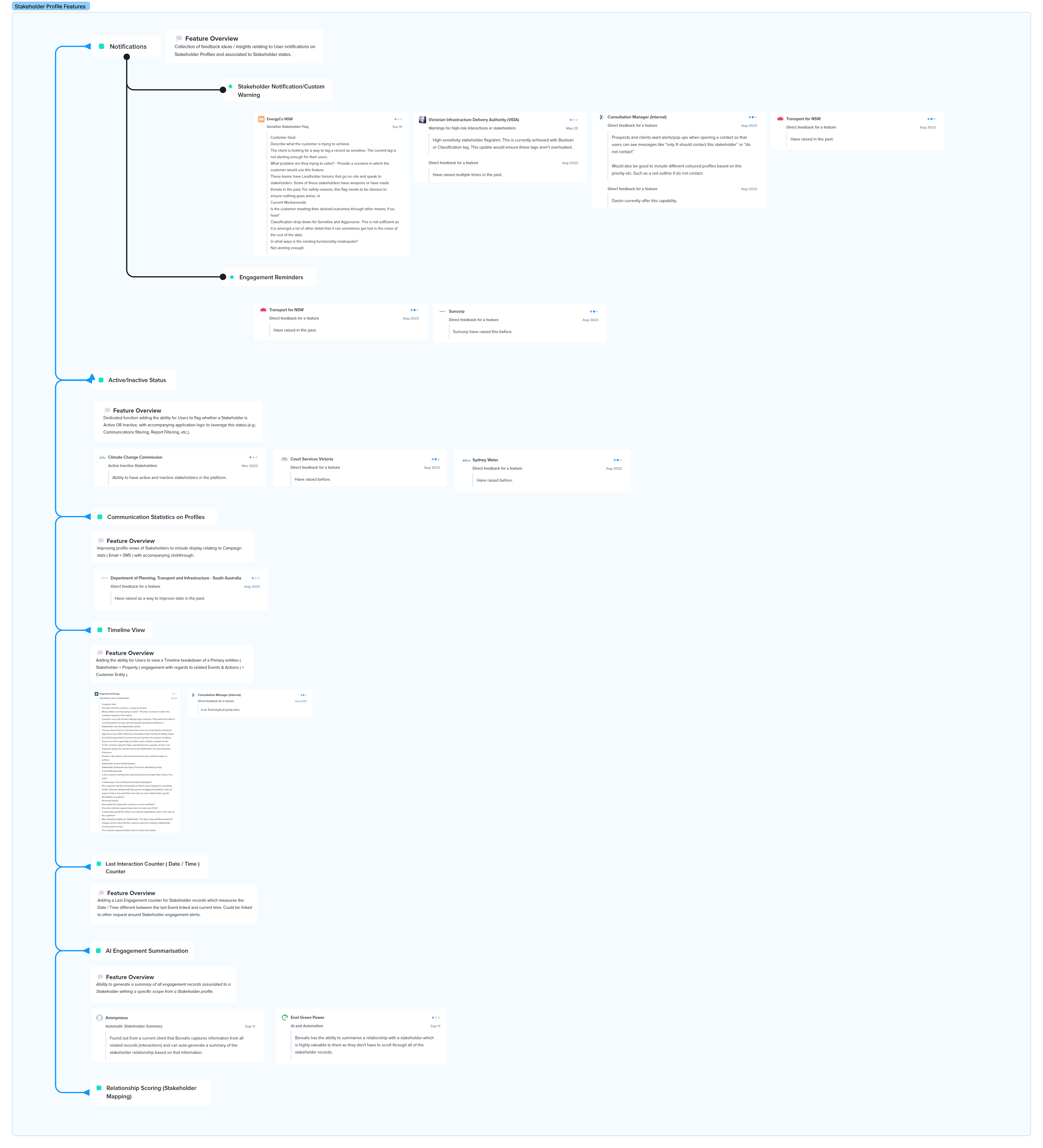

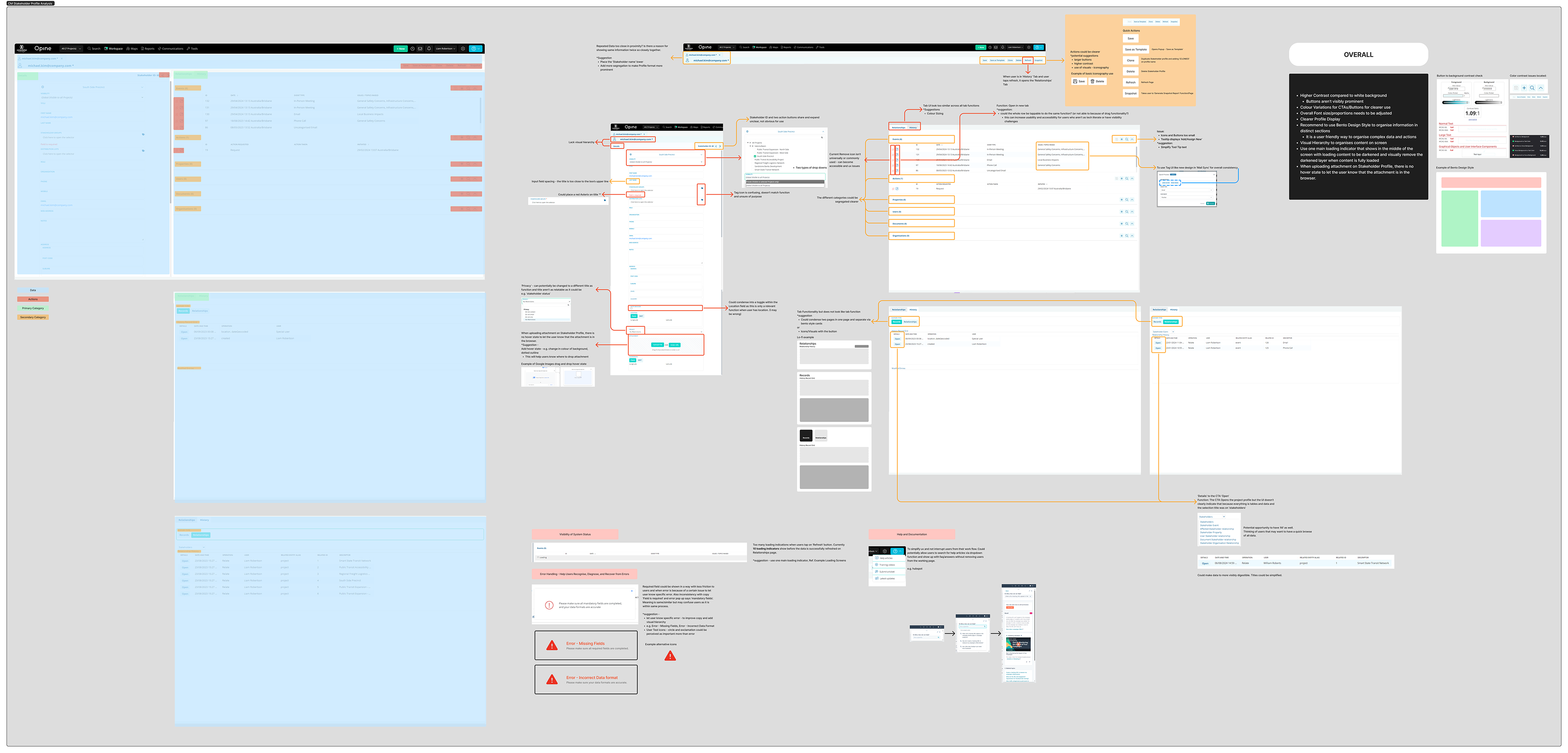
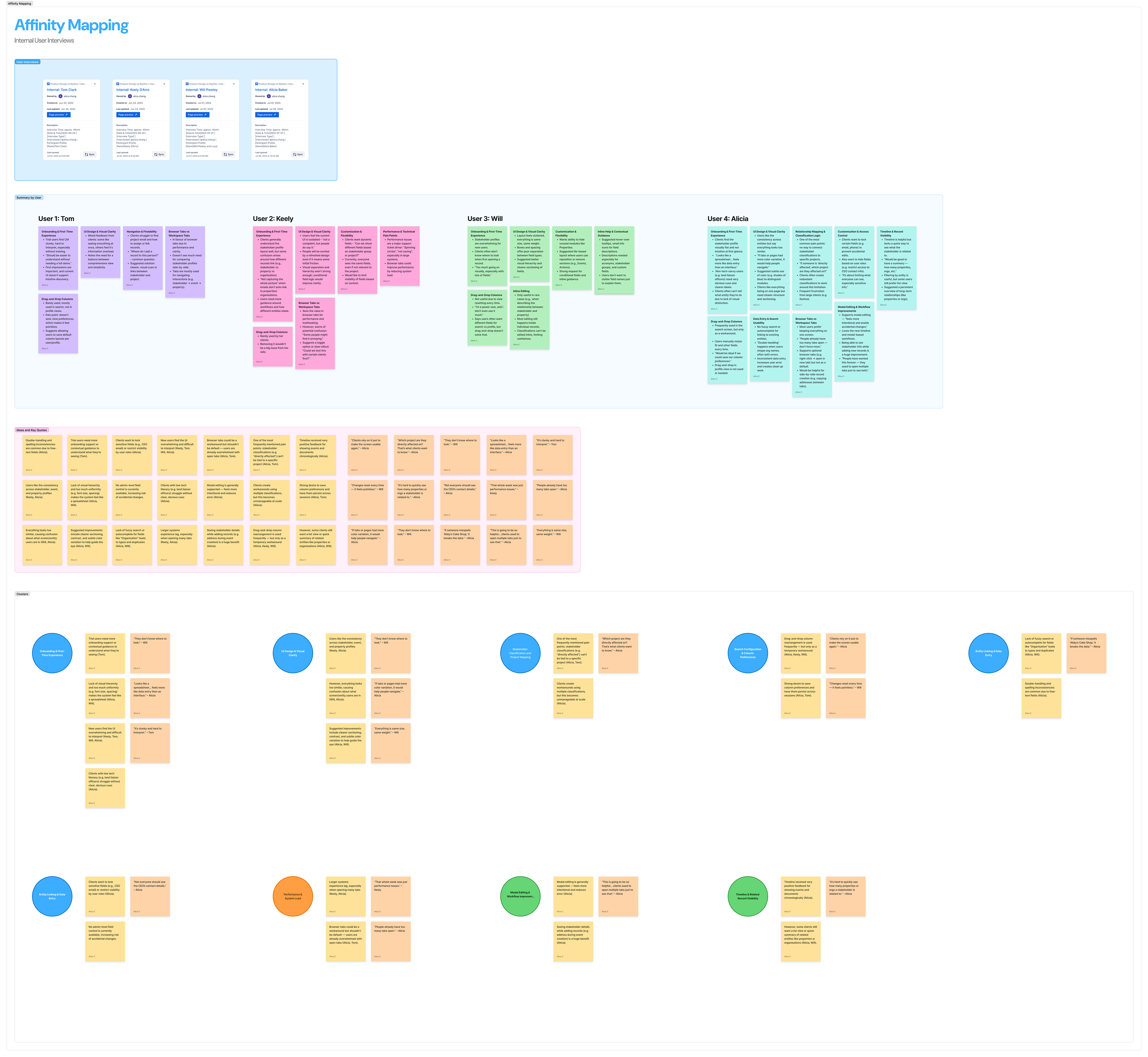
Legacy Design Analysis and Affinity Mapping for User Interviews
Functionality Categorisation
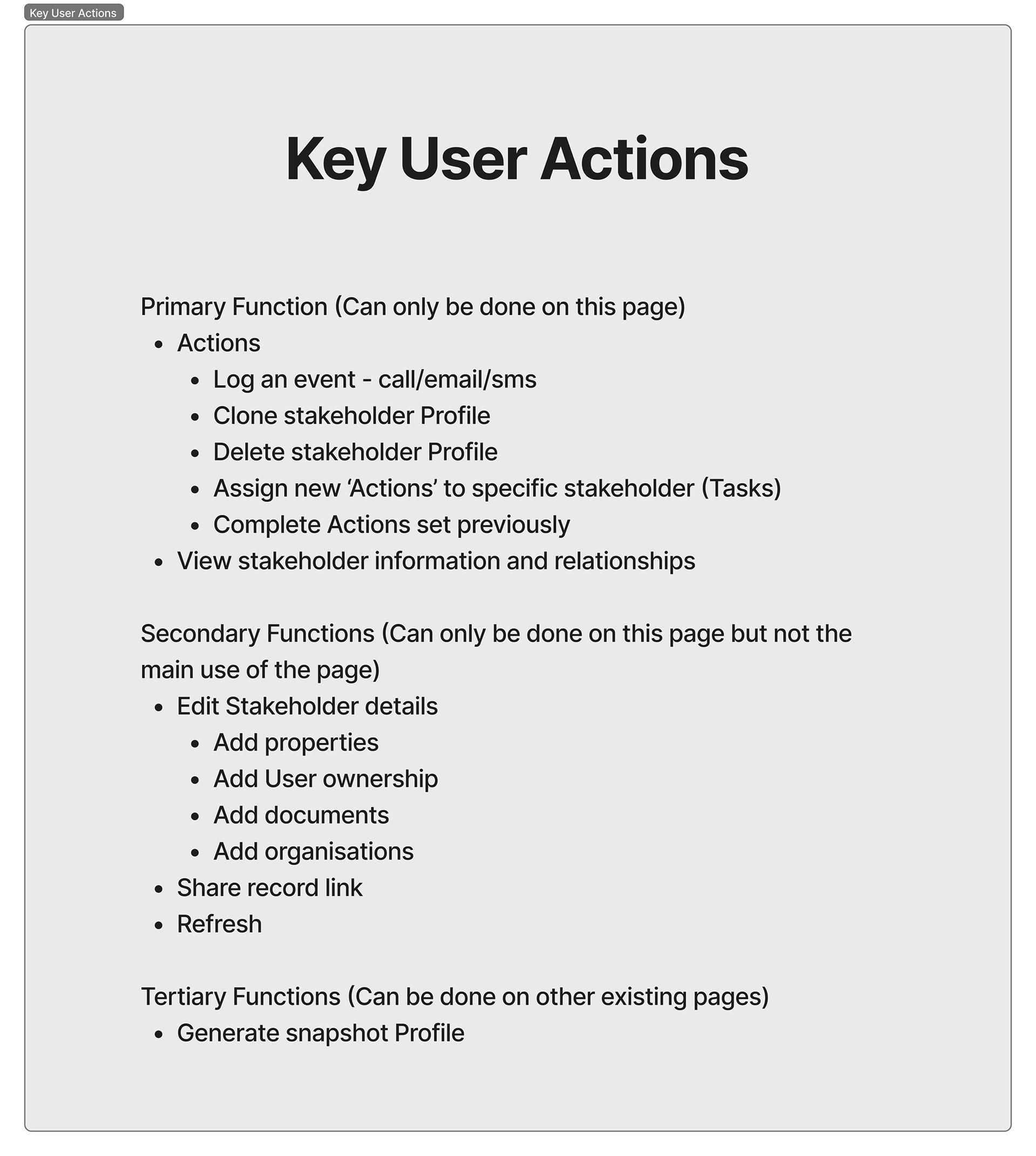
To understand how the stakeholder profile was being used in practice, I conducted a structured audit of the interface and catalogued all available actions and interaction points. I then grouped them by user intent, frequency of use, and contextual importance, classifying them into primary, secondary, and tertiary functions.
Primary Functions
Core, high-frequency actions that are central to the purpose of the stakeholder profile and uniquely performed within this page.
Core, high-frequency actions that are central to the purpose of the stakeholder profile and uniquely performed within this page.
Secondary Functions
Less frequent but still profile-specific actions that support deeper engagement and stakeholder management workflows.
Less frequent but still profile-specific actions that support deeper engagement and stakeholder management workflows.
Tertiary Functions
Actions accessible elsewhere in the system but still surfaced within the profile for contextual convenience.
Actions accessible elsewhere in the system but still surfaced within the profile for contextual convenience.
This categorisation clarified which workflows were mission-critical versus supportive, enabling me to prioritise what needed to be streamlined, elevated in visibility, or reduced to minimise cognitive load. It also informed hierarchy decisions and ensured the redesigned experience aligned with real usage patterns rather than assumed behaviour.
Prototypes
Quick Actions
Streamlined key workflows to help users complete daily tasks faster and with fewer clicks.
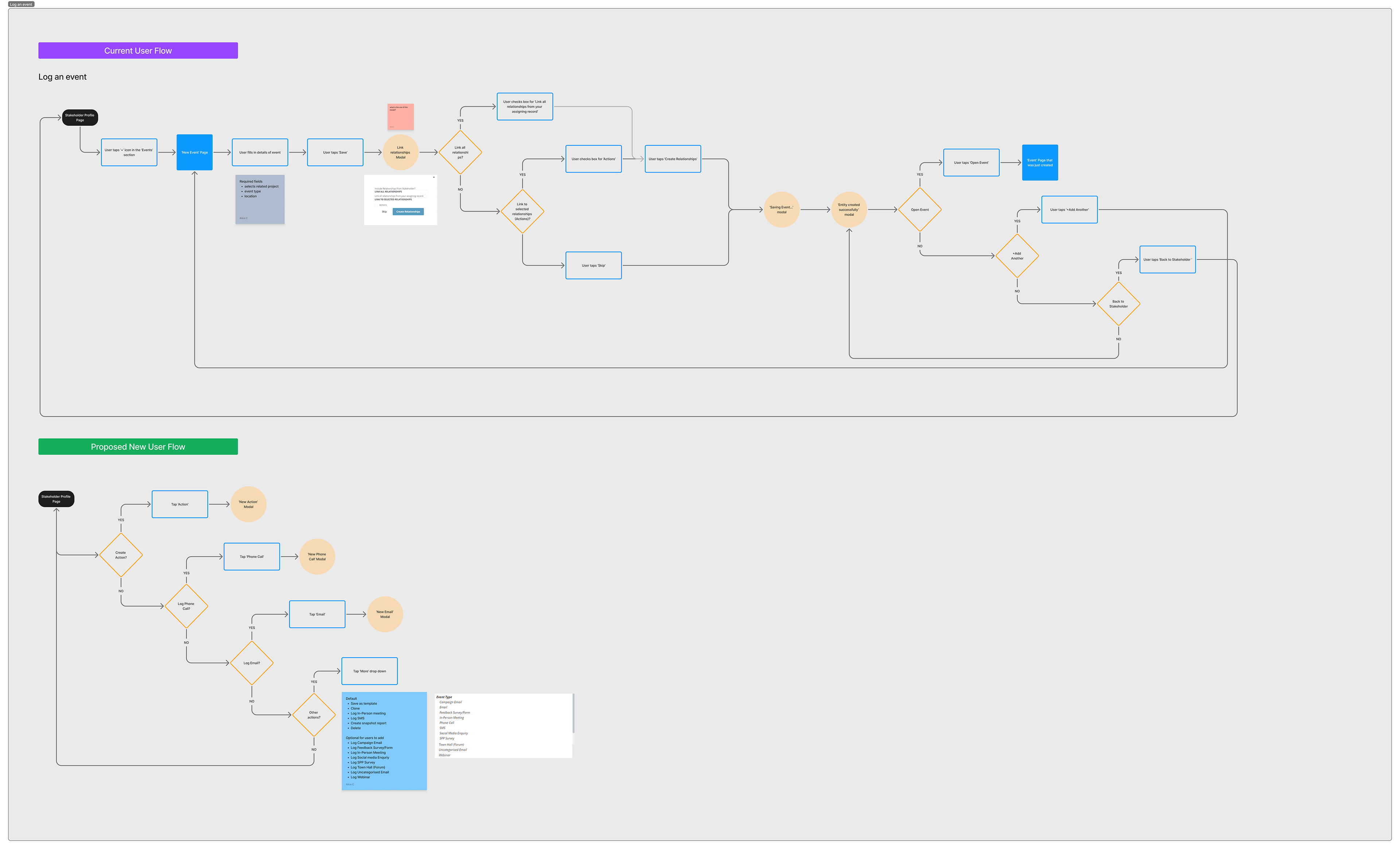
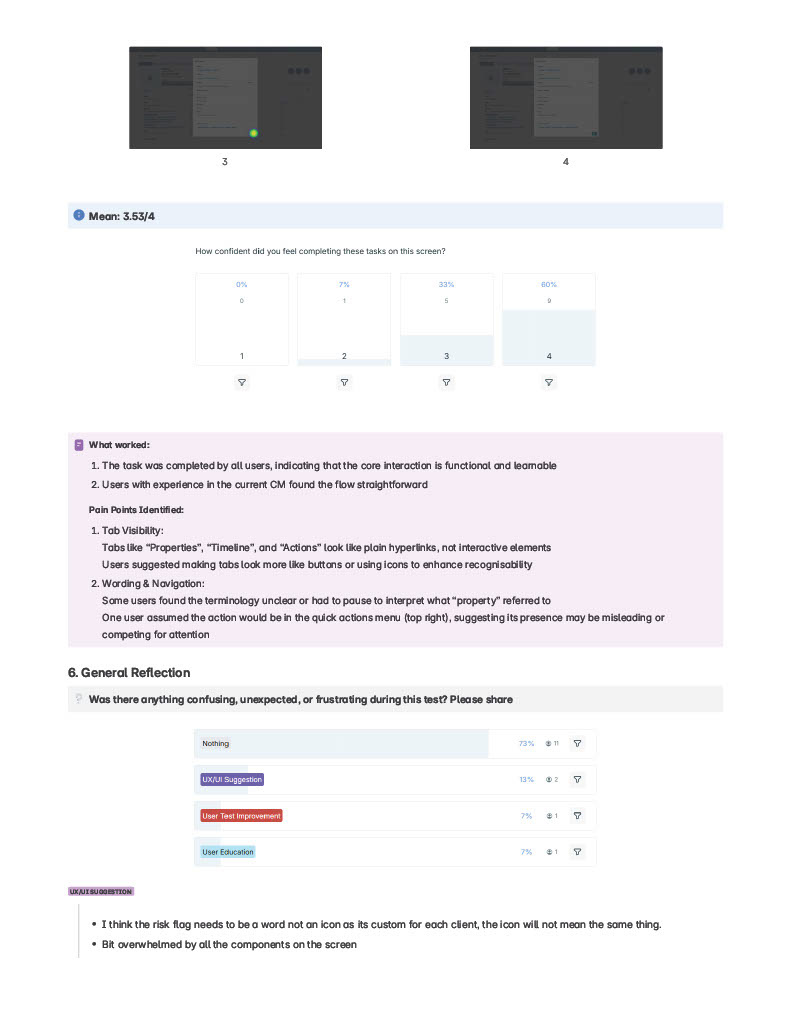
Adding an event to a stakeholder profile is a daily task for Consultation Manager. The new user flow consists of less user process and decision which would potentially help users improve the efficiency of this task by 35%.
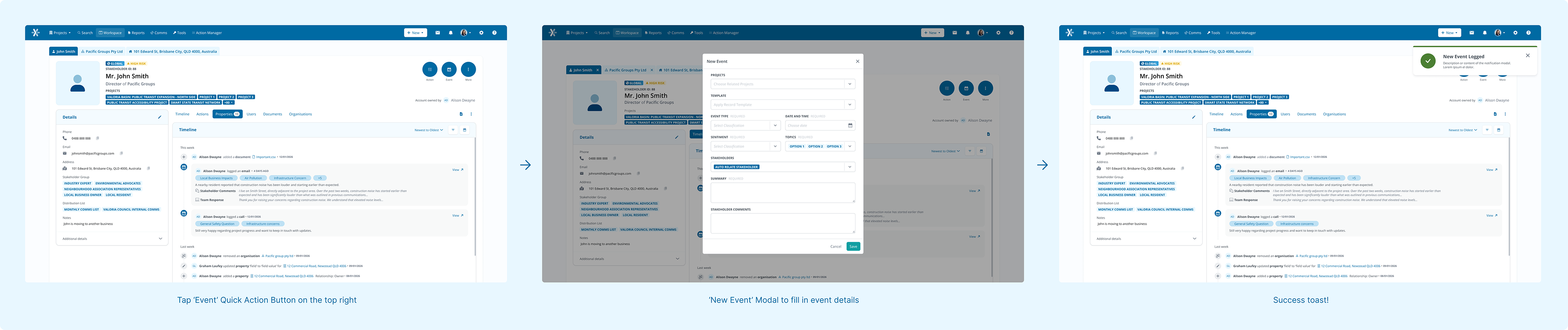
Add/assign Entity Workflow
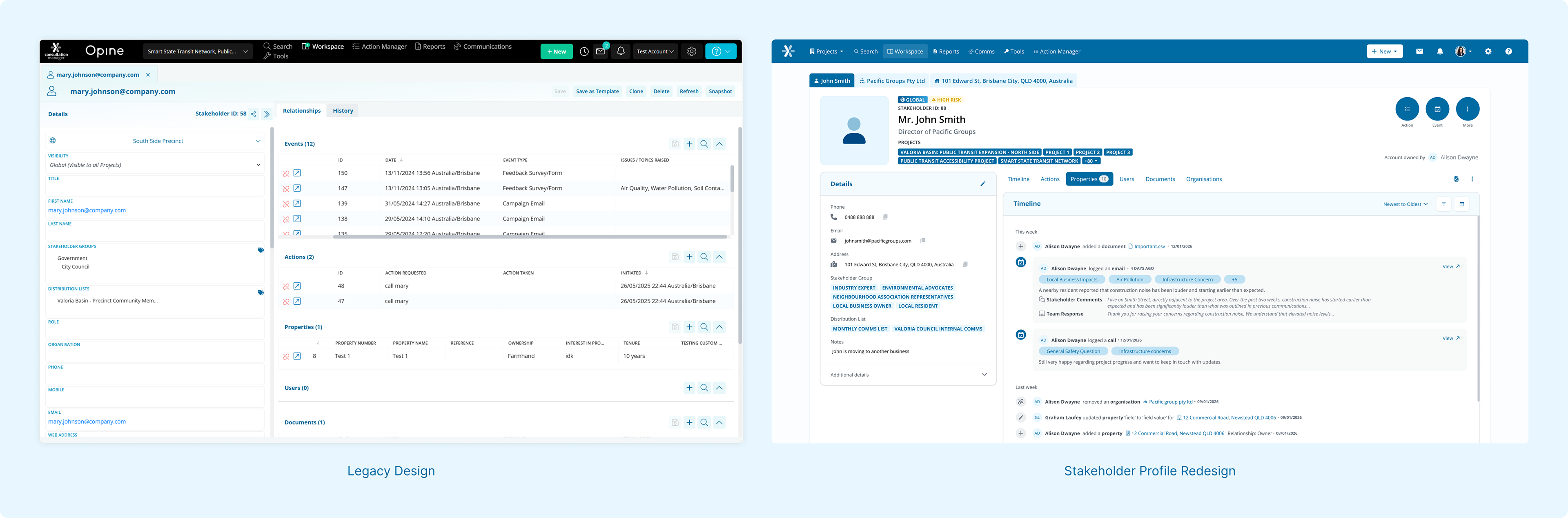
Legacy vs Redesign
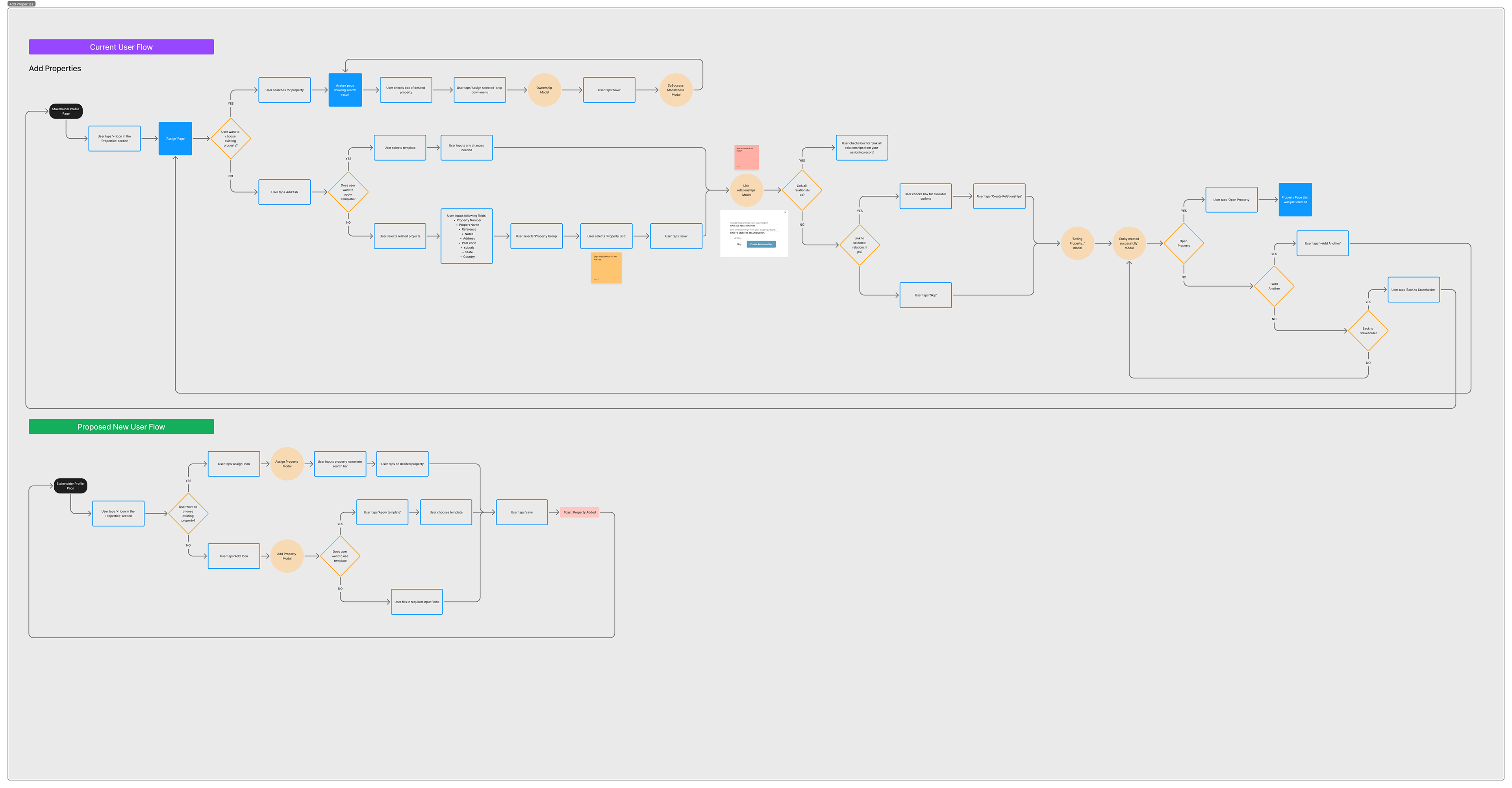
This specific workflow has been simplified significantly as it is a very often used workflow within the current system
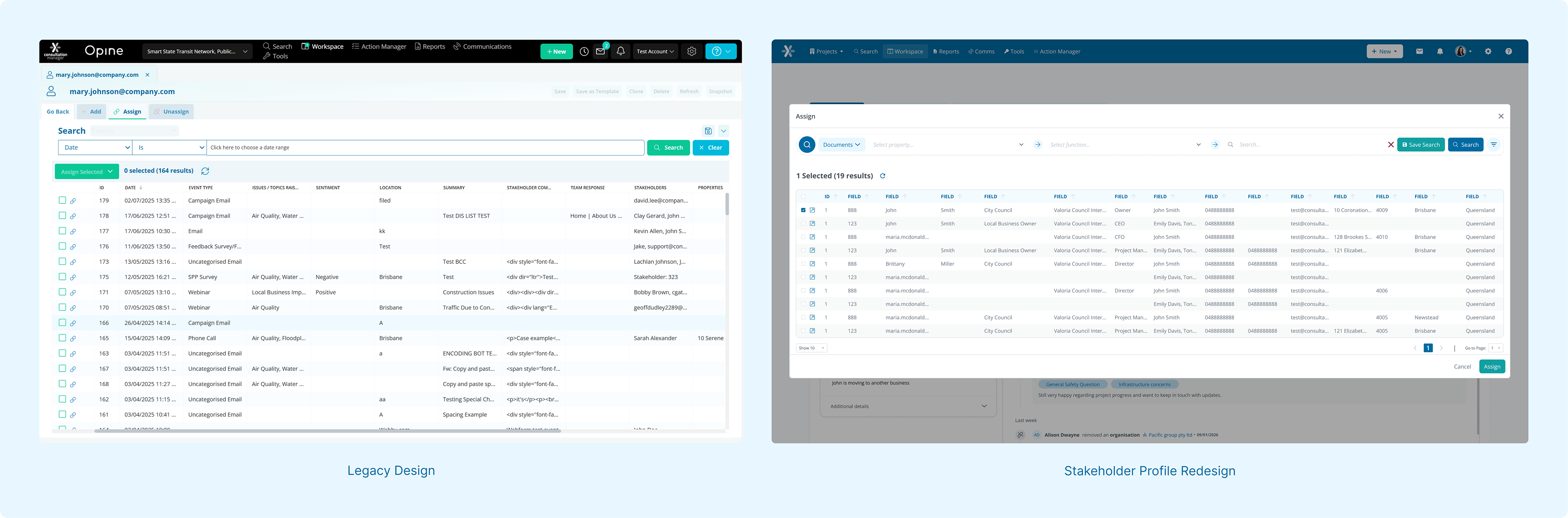
Due to limitations with data structure and risk of data loss if we moved from query search to fuzzy search, we decided to go with the plan to release updates incrementally. To make the current process easier, I have moved the assign functionality into a modal so it can keep the user in the same workflow and simplified the query search.
Components
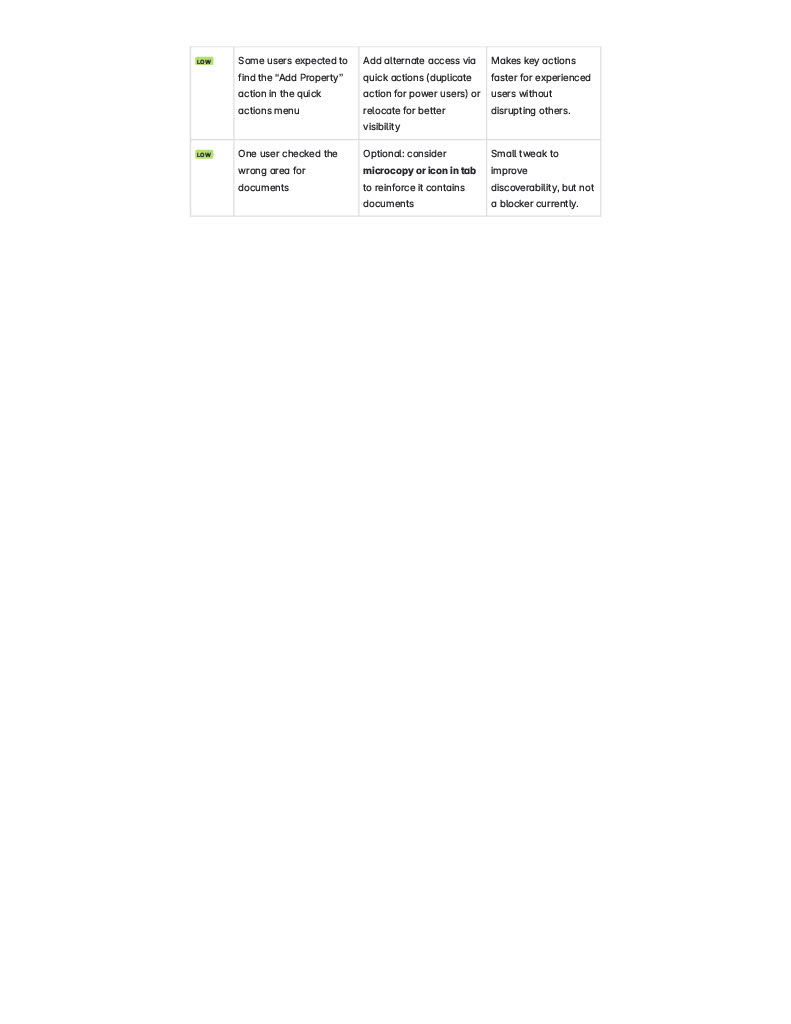
Usability Testing
Internal User Research Panel